
Account Based Marketing (ABM) is a B2B approach that prioritizes a few strategic accounts, using deep personalization and multiple touchpoints to handle complex sales and long cycles. In the current landscape, marked by excessive automation and generic messaging, ABM emerges as an alternative to traditional cold outbound.
What did Startup Summit 2024 reveal about B2B challenges?
Lastly Startup Summit, held in Florianópolis, we paid attention to discussions about solutions for the B2B market — especially when it comes to Demand generation. The session “B2B is Sexy Yes” brought important provocations about how companies are trying to sell in an increasingly saturated message environment.
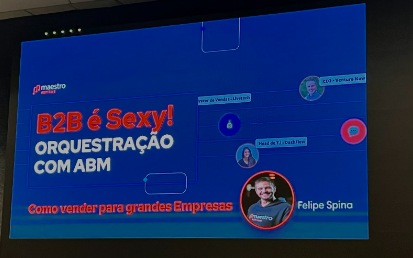
In this context, the talk by Felipe Spina, founder of the ABM platform Maestro, presented a very realistic overview of the ABM scenario in Brazil, its opportunities, and, most importantly, its practical challenges in day-to-day B2B sales.
Why is it becoming increasingly difficult to open conversations with large companies?
According to Felipe, B2B decision-makers are being bombarded by mass messages, with little personalization, and that rarely make sense for the specific reality of their businesses.
This problem has intensified with the popularization of automated prospecting tools, now driven by Artificial Intelligence, which have increased the volume of contacts, but not necessarily their relevance.
The result is clear: opening new conversations with large companies has become more difficult — and this challenge is even greater when we talk about complex sales, common in the B2B universe.
How many touchpoints are needed to generate a quality meeting?
Um recent study of Maestro points out that today it is necessary, on average, 22 touchpoints to secure a quality meeting with a large company.
This data helps explain why relying solely on cold outbound is no longer enough. Instead of just focusing on “selling,” companies need to learn how to help prospects buy, respecting the timing, complexity, and multiple stakeholders involved in the decision-making process.
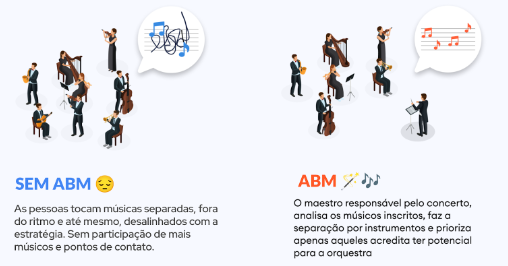
Account-Based Marketing (ABM) helps manage long sales cycles by focusing on high-value customer accounts and tailoring marketing and sales efforts specifically to them. Instead of casting a wide net with broad campaigns, ABM identifies key target accounts and personalizes outreach and content based on their unique needs, pain points, and business objectives. This deep understanding allows for more relevant and impactful engagement throughout the extended sales journey. By consistently delivering value and building relationships with key stakeholders within these target accounts, ABM nurtures leads more effectively, increases engagement, and ultimately accelerates the decision-making process, making it more efficient to navigate the complexities of long sales cycles.
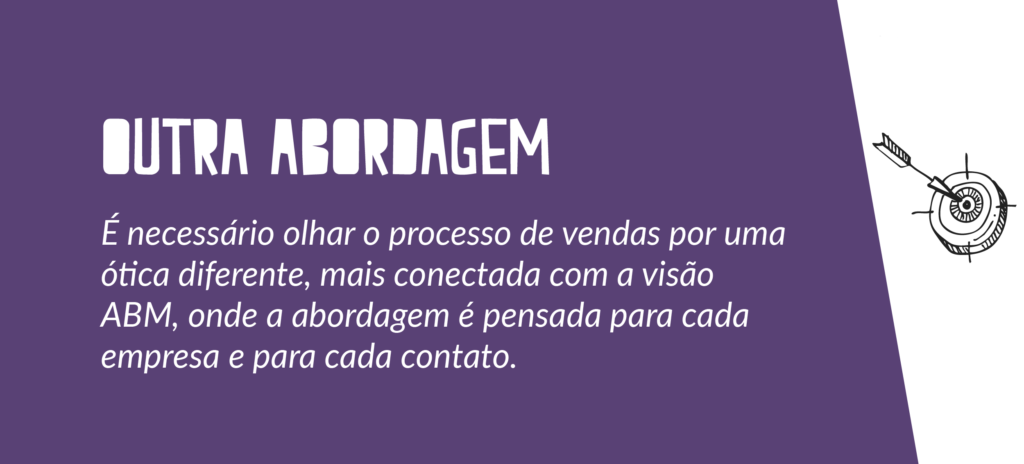
The account-based approach allows for a more realistic view of the buying journey, from the perspective of the prospect company—and not just the seller.
ABM helps to:
- Better inform the prospect over time
- Engage different areas and profiles
- Add value at every step of the decision-making process
This is a more comprehensive view, which involves analyzing, impacting, and engaging multiple touchpoints within the same company, expanding the interaction surface and increasing sales cycle efficiency.
Data provided by Maestro indicates that the more people engaged within an account, the shorter the time tends to be until the first quality meeting.
Working with multiple contacts within the same company offers an advantage because it provides diverse perspectives, breaks down information silos, allows for better problem-solving, and can streamline communication and project execution. Each contact may have unique knowledge, influence, and responsibilities, so engaging with several individuals can lead to a more comprehensive understanding of the company's needs and processes, as well as stronger relationships and more efficient outcomes.
Felipe highlighted that engaging more contacts within the same organization brings clear benefits in different phases of the sale, such as:
- Reduce the risk of loss when a lead changes companies
- Reduce roadblocks and objections throughout the process
- Build internal consensus around the solution
- Open future opportunities in other areas and business units
Instead of relying on a single person, ABM builds a stronger relationship base.
The main steps of an ABM strategy are:
In summary, the ABM methodology involves five main stages, from defining the client to measuring results:
- Identification of ideal accounts
- Mapping of key areas and people
- Diagnosis of specific pains
- Construction of relevant content
- Engagement, sales, and results analysis
The first steps are critical, as ABM requires investment of time, energy, and resources. Therefore, making good account and profile choices is fundamental.
Who should be impacted in an ABM strategy?
An effective ABM strategy isn't limited to formal decision-makers. It should consider:
- Decision-makers
- Influencers
- Buyers
- Users impacted by the solution
In some cases, it's also worth including people who don't directly participate in the decision, but who help to draw the offer in benchmarking conversations, tests or technical evaluations.
How to create content that truly moves prospects toward a decision
After identifying the ideal profiles, the next step is to map their pain points and build content that connects with these real needs.
These contents should help the company to Advance the decision, respecting different touchpoints and maturity levels throughout the purchasing journey.
Here are some practical ABM tactics that are already working:* **Account Prioritization:** Identifying high-value accounts based on revenue potential, strategic importance, or growth opportunities. * **Personalized Content and Messaging:** Creating tailored content (e.g., case studies, whitepapers, webinars) and outreach messages that directly address the specific needs and pain points of key accounts. * **Multi-Channel Engagement:** Using a combination of channels (email, social media, LinkedIn, direct mail, phone calls, events) to reach and engage decision-makers within target accounts. * **Executive Engagement:** Facilitating direct communication and relationship-building between executives at your company and executives at target accounts. * **Sales and Marketing Alignment:** Ensuring sales and marketing teams are working collaboratively, sharing insights, and executing a unified ABM strategy. * **Account Mapping:** Understanding the organizational structure and key stakeholders within target accounts to identify the best individuals to approach and the most effective way to engage them. * **Content Syndication/Advertising to Target Accounts:** Using advertising platforms to target individuals at specific companies with relevant content and offers. * **Account-Specific Events and Webinars:** Hosting or sponsoring events (virtual or in-person) that are tailored to the interests and challenges of a select group of target accounts. * **Gifting and Experiences:** Sending personalized gifts or offering unique experiences to key contacts within target accounts to build rapport and strengthen relationships. * **Data and Analytics:** Leveraging data to understand account engagement, measure the effectiveness of ABM campaigns, and identify areas for improvement. * **Sales Enablement:** Providing sales teams with the tools, resources, and training they need to execute ABM strategies effectively, including playbooks and customer insights.
Felipe shared some approaches that he and his partners have already used successfully:
Creative direct marketing
Sending personalized coffees, vouchers, or giveaways to strategic accounts. In one of the cited cases, Mondelez product packaging was personalized to activate meetings.
Hyper-personalization of messages and content
Creation of ads, landing pages, emails, case studies, and e-books specific to the company's pain points, including account name personalization.
Multiplication of touchpoints
Strategies that connect different areas between companies — CX with CX, technical with technical, CEOs with CEOs — creating a strong coalition for the purchase.
High-value presences
Events, roundtables, podcasts, lectures, and webinars as a way to scale the presence of executives, especially CEOs, while maintaining proximity and relevance.
Felipe also mentioned creative tactics, such as the creation of WhatsApp audios with the CEO's voice, responding to common objections, to be used directly by the sales team.
Is ABM a real opportunity for B2B companies in Brazil?
Although not a simple strategy to execute, ABM represents a Great opportunity in the Brazilian market.
With rising media costs (CPA) and an abundance of automated approaches to large accounts, ABM emerges as an alternative to differentiate yourself from the crowd and build more qualified and sustainable business relationships.