
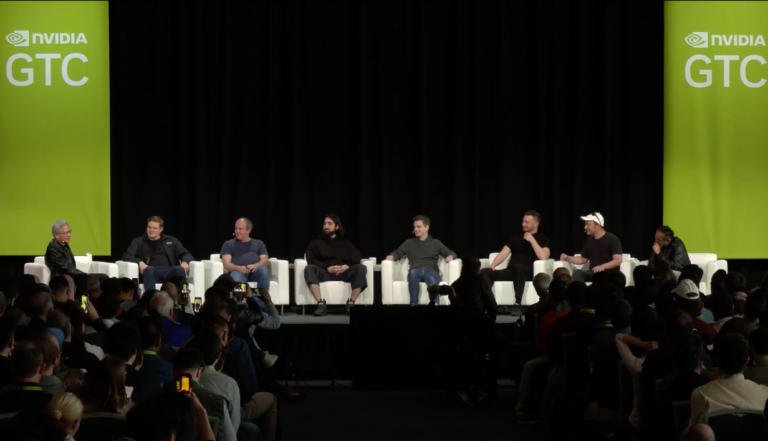
During NVIDIA GTC 2024 (GPU Technology Conference), leaders from Getty Images and AI pioneers discussed how licensed data, fair compensation, and computational efficiency are redefining the future of creative artificial intelligence. Using Getty Images as an example, the discussion covered how the company developed its own Generative AI, based on Nvidia's Picasso solution, to generate images with copyright guarantees and fair compensation for creators.
In the talk, Andrea Gagliano, Senior Director of AI/ML at Getty Images, discussed how the platform continuously compensates photographers for photos used in training the tool, in order to stimulate the creative industry to continue producing material. Andrea comments that, even with an image bank that represents only a fraction of what other market solutions like Midjourney use, they leveraged Getty's experience to create a platform that delivers superior results for commercial use.
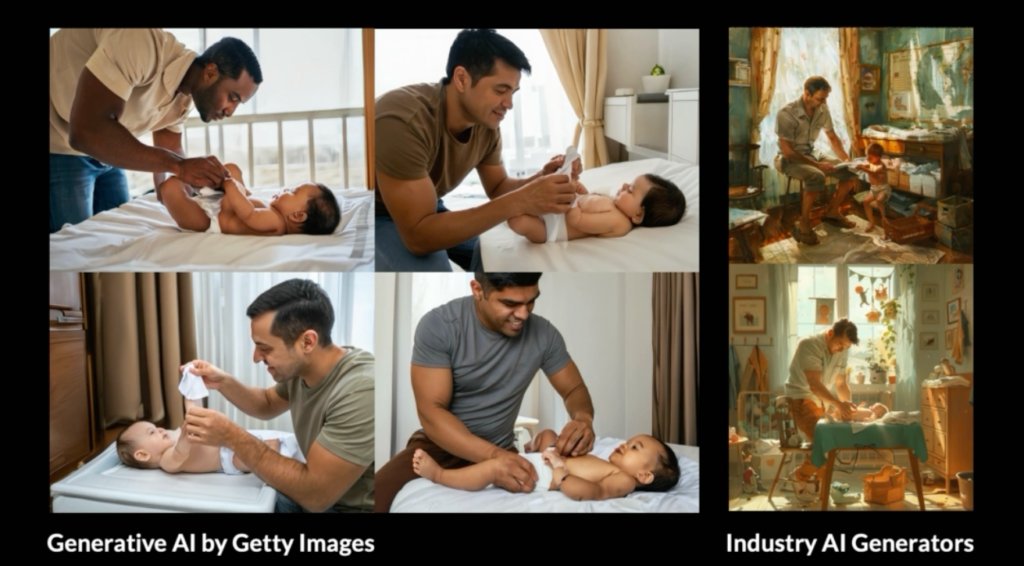
During Nvidia's 2024 global conference, a fascinating talk addressed the intersection of artificial intelligence and human creativity. Using Getty Images as an example, the discussion focused on how the company developed its own Generative AI, based on Nvidia's Picasso solution, to produce images with copyright guarantees and fair compensation for creators. In the presentation, Andrea Gagliano, Senior Director, AI/ML at Getty Images, elaborated on how the platform continuously remunerates photographers for the photos used in training the tool, in order to stimulate the creative industry to continue producing materials. Andrea comments that, even with an image bank that represents only a fraction of what other market solutions like Midjourney use, they leveraged all of Getty's experience to create a platform that delivers superior results for commercial use. Getty's Generative AI was also developed much more intentionally than others, in order to more fairly represent society and deliver more natural, higher-quality results. So, when you create a prompt about a doctor in Getty's AI, you get less biased results than in other tools. And when you input something like parents changing a diaper, you get more natural, non-fantastical results.
Getty's Generative AI was also developed much more intentionally than others, in order to represent society more fairly and deliver more natural, higher-quality results. So, when you create a prompt about a doctor in Getty's AI, you get less biased results than in other tools. And when you input something like parents changing diapers, you get more natural, non-fantastical results.
Why is creator compensation essential for AI sustainability?
Andrea also emphasizes that the decision to remunerate the people responsible for the data used in training should also be seen as a matter of sustainability for training databases. After all, if there isn't enough data for the model to evolve, it will become increasingly inaccurate.
As an example, she brought up a prompt of four generations gathered, which could become increasingly common in the future with people living to nearly 100 years old. Today, there aren't enough images of this scene yet for the model to understand the demand. And this prevents it from responding efficiently. In other words, if creatives stop reflecting the world and documenting social changes in large volumes, models will stagnate.
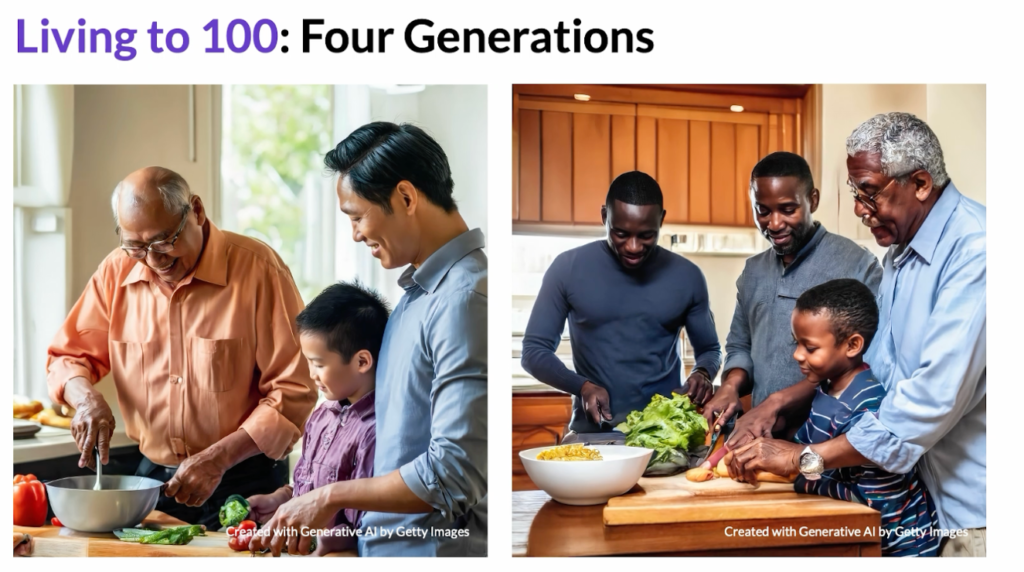
GenAI cannot create images of four-generation families because there is not enough data.
To reinforce the point, Andrea draws an interesting parallel from the evolution of the most searched images on Getty Images over the past few decades, showing how visual records reflect social changes. According to Andrea, when we think about compensating creators, we are not just thinking about them or the market as it was, but rather about the future and the very sustainability of Generative AI models.
What did the Transformer's creator panel reveal about the future of AI?
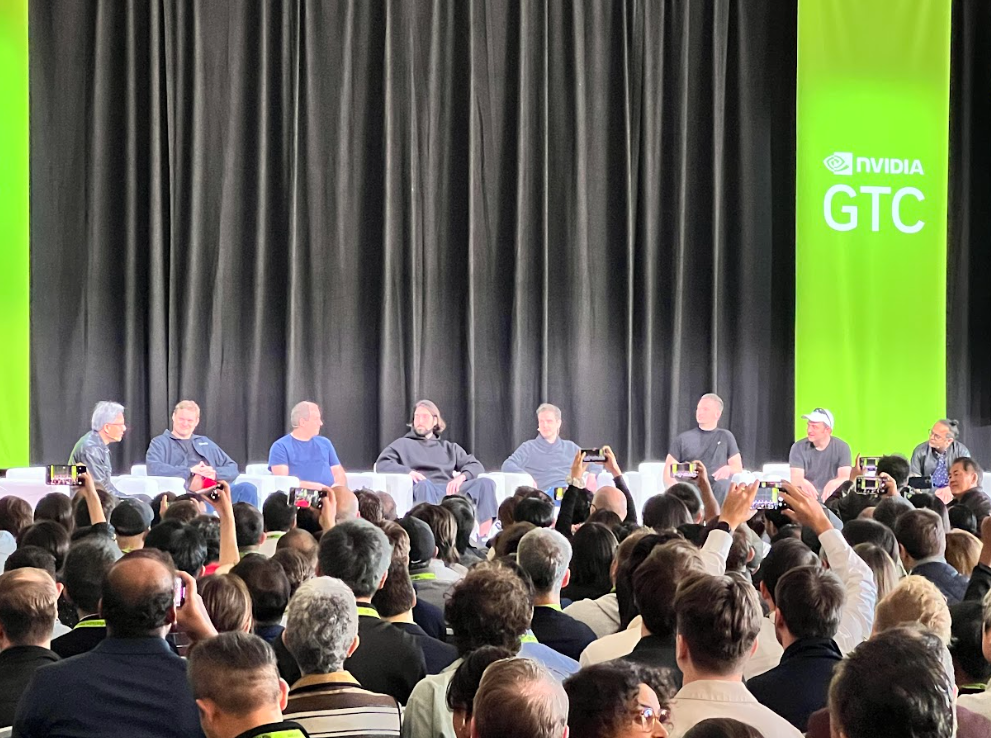
The informal panel brought together, for the first time on the same stage, the inventors of the Transformer model, the architecture that enabled the emergence of tools like Chat GPT.
We were able to follow the story behind the creation, as told by the pioneers of the invention, from when the idea first emerged to solve Google's search and translation speed problems, to curiosities like the model almost being named the unfriendly name CargoNET.
Jensen Huang, CEO of Nvidia, reinforced the importance of the model for the evolution of Artificial Intelligence and stimulated debate about the next frontiers for the evolution of models. They commented on how the next step will likely be having something capable of recognizing the size of the challenge and using the necessary computational capacity in order to make AI more efficient.
Today, for example, a question of 2+2 could trigger a 1 trillion parameter model, which wouldn't be necessary if the model could recognize the size of the challenge and trigger the appropriate computational capacity for it.
Much has been said about how, in the future, a new model could be created that uses less data and less computational power to achieve even better and more sustainable results.
Which companies are building the future of artificial intelligence?
At the end of the panel, the speakers briefly presented the companies they are helping to build today:
- Essential.Ai: A company working to build models that can observe humans, learn, and operate with the same efficiency.
- Character.ai: Platform for creating and interacting with AI-based avatars.
- Inceptive Biological software company using AI to develop new medications and treatments.
- Fish.AIResearch company for new models inspired by nature
- Cohere: A language model designed for enterprises.
- NEAR: Protocol for programmable money.
On a day marked by innovative insights and revolutionary perspectives, these talks illuminated the intersection between artificial intelligence and human creativity, pointing toward a future where technology not only reflects but positively shapes society.
We are at a crucial moment in the evolution of AI, where collaboration between humans and machines promises to radically transform how we interact with the world around us.