
What was the main cybersecurity warning at Mind The Sec 2024?
Gabriel Bergel's main message at Mind The Sec 2024 was clear: Cybersecurity is no longer just a technological issue and has begun to directly impact society, the economy, and even public health.
In the crowded auditorium of the event, Bergel — one of Latin America's leading cybersecurity experts — challenged the audience to rethink digital security as a human, organizational, and cultural problem, rather than merely a technical one.
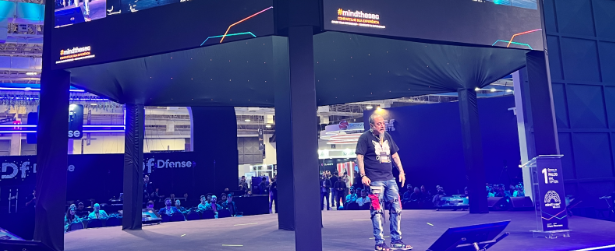
According to him, the internet and digital devices are present in practically all aspects of modern life: work, education, leisure, and personal relationships. This constant presence transforms the 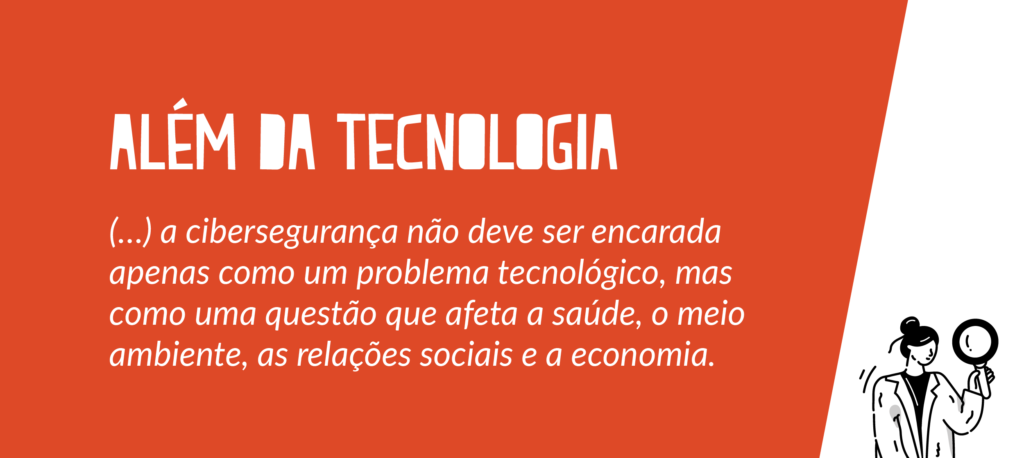 cybersecurity is a topic of collective interest.
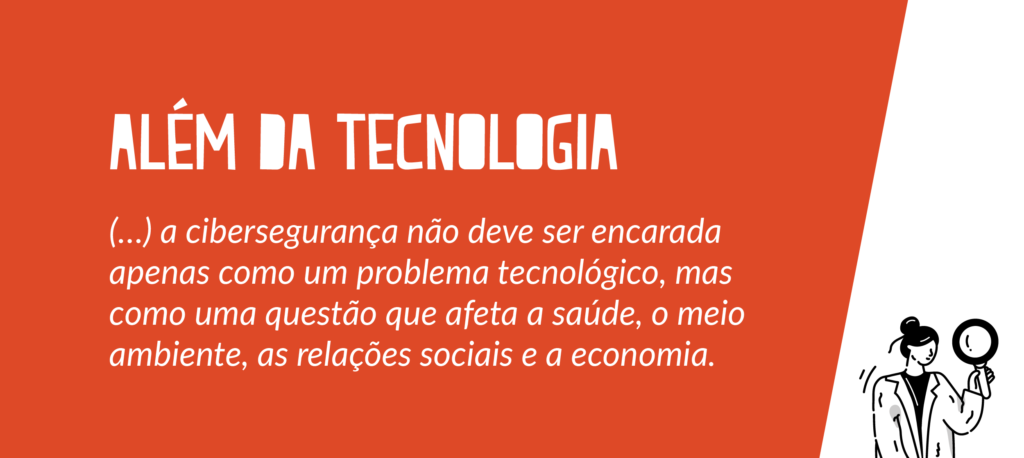
Bergel also pointed out that the excessive and uncontrolled use of technology can trigger compulsive behaviors and other disorders, expanding the digital safety debate into the realm of public health.
How much do cybersecurity failures cost companies?

Corporate security failures can generate financial and operational impacts on a global scale. On July 19, 2024, a software update brought down the systems of approximately 25% of the world's largest companies.
The incident caused the cancellation of thousands of flights and generated estimated losses of at least 5.4 billion dollars. Furthermore, millions of machines in smaller companies were also affected, pushing losses even higher 700 million dollars.
The most critical point, according to Bergel, is that the problem it was not caused by a sophisticated hacker attack, but by a flaw in the software quality control process.
Why do simple attacks still pose major risks?
Gabriel Bergel presented another recent case that shows how human failures continue to be one of the greatest vulnerabilities in digital security.
In a Chilean ministry, a criminal used only a cell phone, WhatsApp, and lies to convince security guards to remove protective locks from laptops. With this, accomplices gained access to the building and stole a safe and 23 computers, including the minister's own laptop.
The case illustrates that social engineering and inattention often cause more damage than advanced technological attacks.
These examples reinforce that cybersecurity needs to go beyond system protection and involve education, processes, and continuous attention within organizations.
What is the role of ethical hackers in cybersecurity?
Gabriel Bergel argues that ethical hackers play an essential role in protecting digital society. For him, these professionals act as true cybersecurity activists, helping companies and governments fix critical flaws.
Although frequently viewed negatively, ethical hackers expose vulnerabilities before criminals can exploit them, contributing to collective security.

An example cited was that of Barnaby Jack, who in 2010 publicly demonstrated how ATMs could be turned into “slot machines.” Although controversial, the presentation helped drive regulatory changes in medical devices.
Another emblematic case was that of Charlie Miller and Chris Valasek, which exposed defects in Jeep vehicles, leading to a recall of 1.4 million cars.
How can the exposure of flaws protect citizens?
Bergel also shared personal experiences in Chile. In one case, a security flaw exposed the salaries of all workers in the country.
In another, a government anonymous tip application allowed criminals to identify the location of the whistleblower, putting citizens at direct risk.
By making these flaws public, it was possible to fix the problems and prevent serious consequences for the population, reinforcing the social role of cybersecurity.
What is the future of cybersecurity according to Gabriel Bergel?
For Bergel, the future of cybersecurity necessarily involves continuous education and awareness.
In his lectures, he dedicates part of his time to engaging in dialogue with young people and stimulating discussions about digital security in family, educational, and professional environments.
At the end of his presentation at Mind The Sec 2024, he left a direct invitation to the public: to talk about cybersecurity with grandparents, parents, children, and coworkers.
According to him, when each person assumes this role, society ceases to be a set of vulnerabilities and becomes an active network of protection against cyber risks.