
Artificial intelligence is already transforming education by enabling more personalized learning and smarter assessments, and organizations by automating processes and integrating complex workflows.
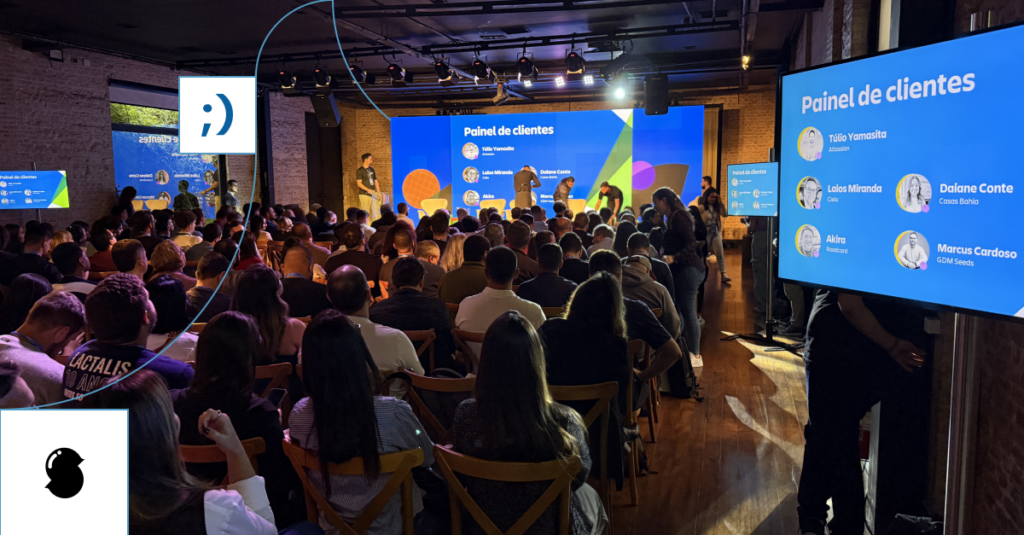
These transformations were debated in Atlassian Team 25, an event held in April 2025 in Anaheim, California (USA), which brought together experts to discuss the role of AI in human and organizational development.
How is AI changing education beyond content?
In the educational context, artificial intelligence is being applied to go beyond automated quizzes or test grading. Discussions at Atlassian Team 25 pointed to AI as an ally in the development of critical thinking, creativity, and problem solving, skills considered central for the 21st century.
One of the examples presented was the use of AI-based simulations, such as interactive historical dialogues—for example, virtual interviews with historical figures. This type of approach allows students to explore complex contexts actively, analyzing arguments, making decisions, and formulating questions, instead of just memorizing information.
How does AI contribute to assessments and learning monitoring?
Another prominent use of AI in education is in intelligent formative assessments. Artificial intelligence-based systems can analyze student performance patterns, identify learning gaps, and suggest personalized interventions throughout the educational process.
These tools expand the teacher's analysis capability by offering consolidated reports on student progress, recurring difficulties, and argument quality. As a result, assessment is no longer merely classificatory and becomes diagnostic and continuous.
Furthermore, the automation of administrative tasks—such as grade consolidation, reporting, and activity recommendations—frees up time for educators to focus on individualized monitoring, a central aspect of a more personalized education.
What are digital agents and how are they being used in companies?
In the corporate environment, artificial intelligence has been consolidating itself primarily through intelligent process automation. One of the highlights of Atlassian Team '25 was Atlassian's digital agents, presented as systems capable of operating in an integrated manner with corporate tools.
These agents can connect to platforms like Confluence, Jira, Slack, and Google Drive, performing tasks such as:
- Ticket and request analysis
- Automatic report generation
- Creation of knowledge base articles
- Task assignment for review and monitoring
In practice, they function as virtual colleagues, reducing repetitive workloads and increasing operational consistency.
How can companies implement AI agents efficiently?
Based on the discussions presented, there are two main approaches to adopting these agents:
- With code: using SDKs, such as the Forge SDK, for more advanced and customized integrations.
- No-code: allowing non-technical professionals to create basic automations, democratizing the use of AI in organizations.
Regardless of the approach, good practices are essential to ensure efficiency and security. Among the highlighted recommendations are:
- Define clear and objective instructions (prompt engineering)
- Provide concrete examples of expected output
- Limit the scope of action of the agents
- Break down complex tasks into smaller steps
- Perform rigorous testing before deployment
- Control permissions and access to sensitive data
These precautions reduce operational risks and increase the reliability of AI-based systems.
What is the strategic impact of AI for education and organizations?
Both in education and in the corporate environment, the main message reinforced by Atlassian Team 25 is that artificial intelligence should not be seen merely as an automation tool, but as a strategic partner.
In education, AI creates conditions for more interactive, personalized, and inquiry-driven methodologies. In organizations, it enables teams to direct their efforts toward activities of higher strategic value, while automated systems take on operational and repetitive tasks.
The common challenge to both contexts is to apply technology consciously and responsibly, ensuring that artificial intelligence expands human capabilities instead of simply replacing them.
The future of AI will be guided by personalization and efficiency
The reflections presented at Atlassian Team 25 indicate a future where artificial intelligence will be increasingly decisive in personalizing experiences, optimizing processes, and supporting decision-making.
As these technologies become more present, the competitive edge will lie less in adoption itself and more in the quality of implementation, the clarity of objectives, and the ability to integrate AI into human and organizational development in an ethical and strategic manner.