How Amyr Klink said everything we needed to hear about AI without needing to touch on the subject
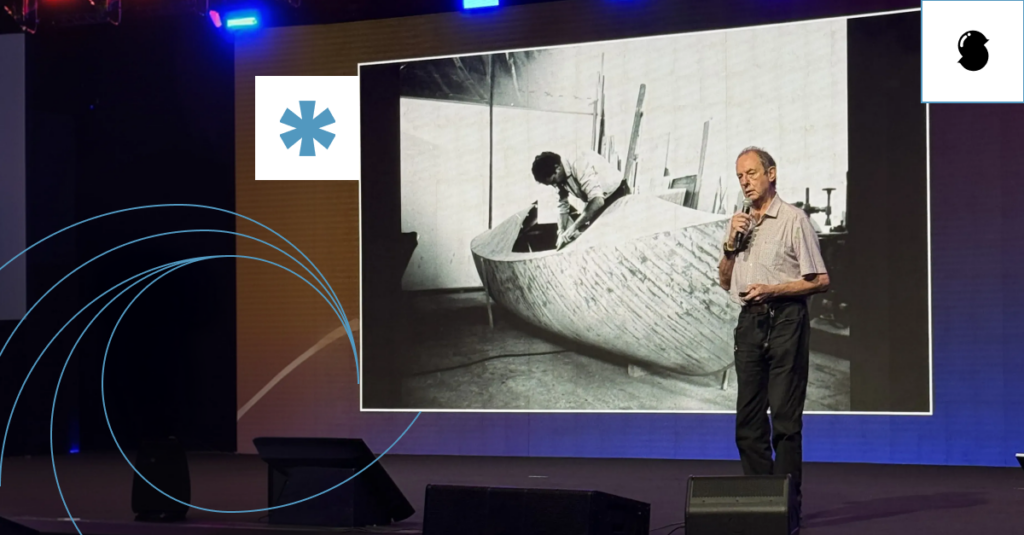
The talk by Amyr Klink at the last event of NTSec Group It was a very happy surprise. Of course, seeing up close a man who spent his life at sea, circumnavigated the globe twice, wrote fascinating books, and broke several sailing records would necessarily be interesting.
But honestly, I didn't expect it to be so applicable to the current context.
I didn't think I'd be having such an intimate conversation about marketing's panic regarding the replacement of human work by AI, the devaluation of agency solutions, and SaaS.
After all, Amyr seems to prefer being stuck in the ice of the Antarctic Peninsula to being in a meeting in Faria Lima. And he started the lecture by saying that he graduated as an economist from USP, but always thought that economics was useless.
Right from the start, when talking about his childhood, he gave the first lesson in systems architecture; obviously, without using that expression.
The Portuguese and the Art of Letting Water In
Klink recounted that, as a child in Paraty, he heard comments that the city had been poorly built. After all, during the full moon tides, the seawater would rise and always flood the streets. To a tourist, it seemed like a stupid engineering error.
But it wasn't a mistake.
Era feature.
The Portuguese knew the city was dirty and lacked basic sanitation at the time. So, they designed the streets with a calculated slope so that, at high tide, the sea would deliberately enter.
The saltwater rushed in, washing away all the dirt from the streets, and as the tide receded, it carried everything away, leaving the city clean.
They didn't build dikes.
They didn't fight the tide.
They used the uncontrollable force of nature to clean the mess.
In marketing, there are still a lot of people who think AI is going to stifle our creativity. They’re drafting manifestos about “100% human content.” They’re placing sandbags at the doors of agencies.
Instead of simply understanding the city we need to build.
We can't make a boat that won't capsize
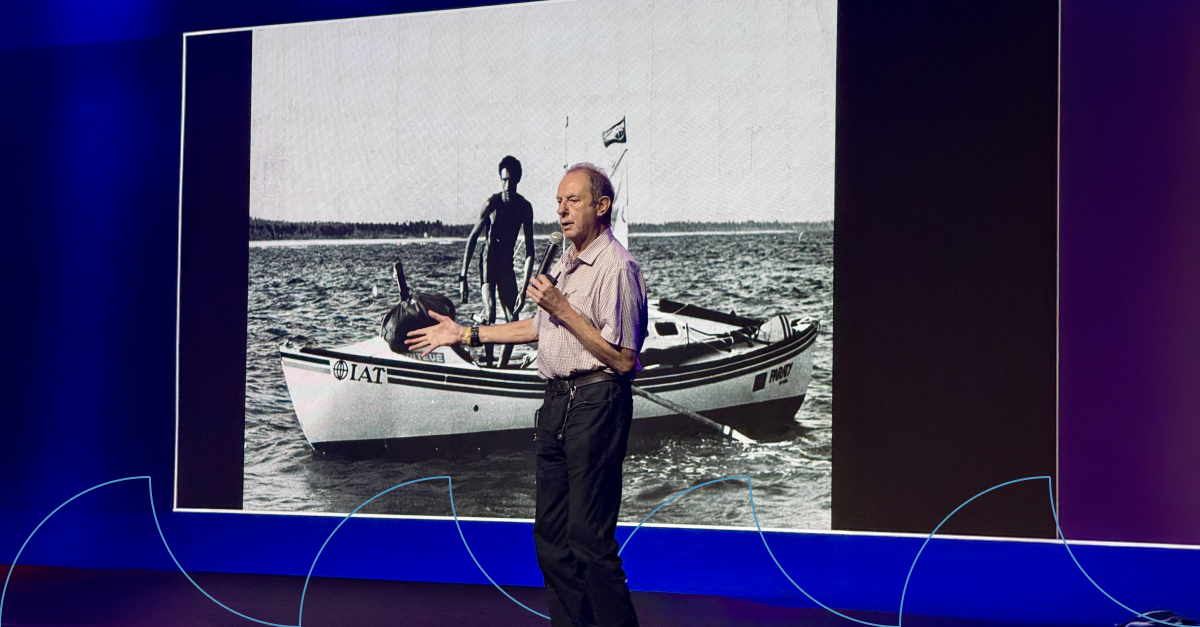
Klink spoke about the planning of his solo Atlantic row crossing in 1984. He had a basic physics problem that kept him up at night: the boat was 5 meters long; the waves of the Benguela Current reached 15 meters.
For months, he and his team tried to design a boat that wouldn't capsize. Safety, in the team's minds, was about avoiding accidents at all costs.
Until a “crazy” engineer in São Paulo looked at the project and gave the advice that saved Amyr's life:
“Amyr, forget it. The wave is bigger than you.
If you build a boat that won't capsize, the force of the sea will break you in half.
You have to create a boat designed to capsize.”
So, they stopped trying to avoid the inevitable.
They designed a ballast system where the boat could rotate 360 degrees in the water and return to its original position on its own, with the pilot inside. The risk of capsizing was no longer a nightmare and became a project feature.
Yes, Amyr, in 1984!
It's 2026, and we who live by creativity often still find ourselves looking at the AI tsunami on the horizon and praying it doesn't reach the little corner where we're hiding.
It's time to build our convertible boats.
Open honest conversations with clients, marketing, product, and sales teams and start sailing with the wind.
I see that the fear of being replaced has paralyzed many good people. Sometimes, we waste time discussing things that are already settled, such as responsibility for what AI generates. AI generates nothing without a human behind it at some point. The concept of human in the loop is well-established.
We need to go forward.
It's time for us, marketing humans, to create new resilient work models in a collaborative and intelligent way, losing our fear of rocking the boat.
The brilliant idea of being stranded in Antarctica
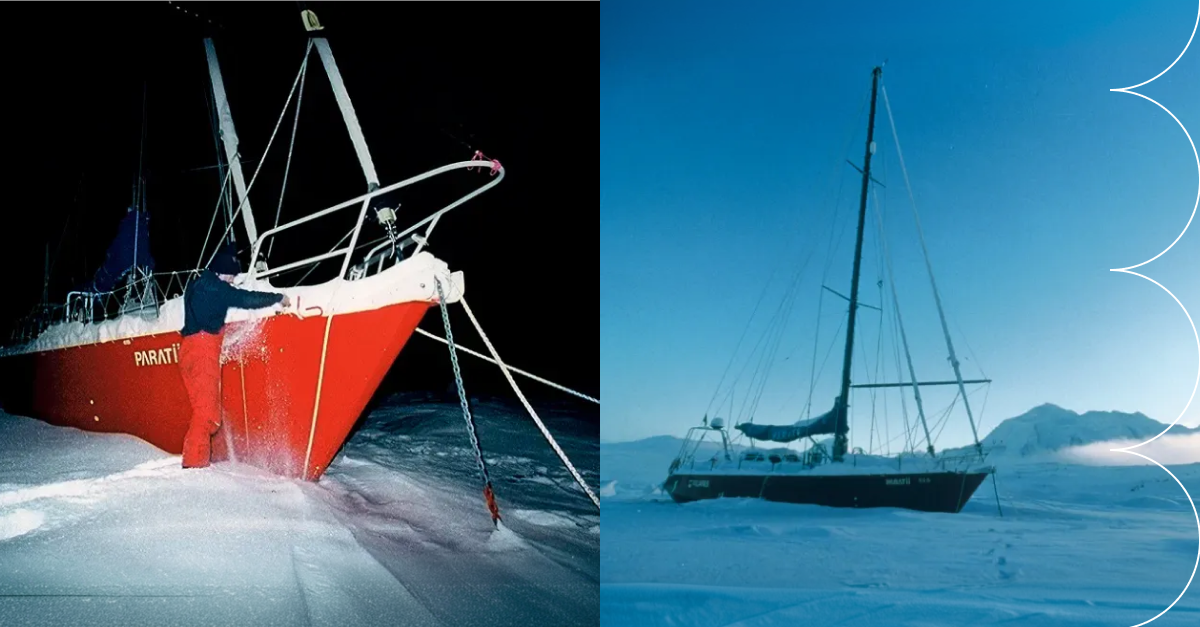
When Klink planned the expedition, he had a practical problem: the duration of the trip. That is, he wouldn't be able to reach his destination during the short Antarctic summer. The sea would freeze over, and he would be stuck there.
It was inevitable.
Then, he created the concept of wintering.
He designed the boat specifically to be squeezed by the ice and rise, landing on the solid surface. He turned Dorian Bay into his private, one-man city. And he turned the immobile time into his greatest asset.
It was in that stationary time, without sailing, that he repaired, planned, wrote, and truly lived Antarctica.
Interestingly, in marketing, we have difficulty learning this lesson. To understand restriction or challenge as a creative impulse. Of course, the immense volume of content, the risks of AI, and automation can be seen as a great winter we have to get through.
On the other hand, letting us off the hook could be amazing.
It's an opportunity to look at the processes and rethink them. It's time to fix our sails, clean our engines, and prepare ourselves. It's time to take advantage of the layup.
History isn't something you win; it's something you write.
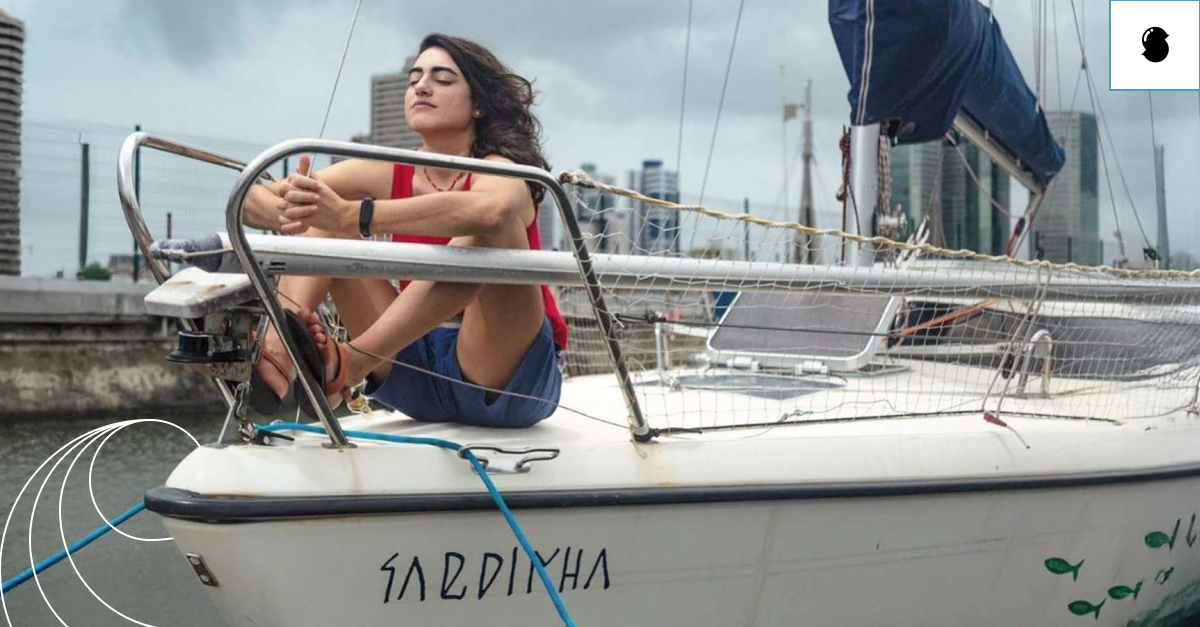
Tamara, Amyr's daughter, once asked to borrow the family boat for an expedition. Amyr had the boat. The boat was ready, safe, tested. All it took was handing over the key and wishing her good luck.
But he said a resounding no.
“Daughter, you have to make your own story.
History is something we don't get as a gift.
We have to write.”
The logic was impeccable: if she took the ready-made boat, she would be just a passenger, not a sailor.
The father's refusal forced the daughter to buy an abandoned hull, renovate it, understand every screw, sand the deck, design the electrical system. To know the boat (sardine) like the back of her hand. To calculate her own risks.
Years later, she became the youngest woman to cross the Northwest Passage. Not because her father was Amyr Klink, but because she built her own boat.
A hard lesson, but an easy one for us “users” of technology to learn.
Outsourcing thinking to ChatGPT or Midjourney is like borrowing a boat. It's easy. Anyone can do it. But it doesn't build a competitive edge. And it can be costly when you're in the middle of a storm without knowing how your own boat works.
The true professional is not an AI user. They are a workflow builder. Don't wait for ready-made solutions. Doubt, question. Build your own methodology. Radical autonomy is the only security that exists.
The worst shipwreck is not to set sail
I feel like we often spend too much energy trying to avoid waves, trying to dry the floor in Paraty, trying to protect our positions with glass walls.
Amyr Klink's generous lecture makes clear the lesson of stopping the fight against the nature of things.
The wave is coming.
The ice will freeze over.
The tide is going to rise.
Don't build a business to avoid that.
Build a business that can dance with chaos.
Because, in the end, stability is an illusion. The only real thing is the ability to flip and come back whole.
The iron pin on the dock in Paraty
Amyr ensured that he never traveled for adrenaline, to break Guinness World Records, or to write self-help books. His goal in sailing around the world in Antarctica was a technical and almost poetic obsession: to navigate thousands of miles, face the worst storms on the planet, and return to tie up the boat in the exact same spot from which he departed in Paraty.
It wasn't about speed. It was about the precision of imagining the impossible and executing it with such mastery that it returned to the starting point, transformed.
Purpose-driven marketing
In recent decades, we've become so obsessed with performance, CAC, ROI, and tracking that we've forgotten why we decided to work in this field.
Almost no one chooses marketing because they love setting up APIs.
We enter this crazy life to tell stories. To positively impact lives. To generate emotion, to enchant a client, to make someone laugh or cry with a campaign.
And the big opportunity for AI is here.
By automating the “middle” (the spreadsheet, the post, the rollout), AI forces us to return to the “end.” If the machine handles the grunt work, what's left for us, the marketing humans?
About the purpose.
About empathy.
About the ability to understand the pain of others and design a solution that the machine doesn't even know exists.
Amyr travels to prove that planning overcomes chaos.
We work to connect people.
This is the iron mooring post where we should return and tie up our boats.