
Insights presented at Digitalks Expo 2024 show that internal silos, low psychological safety, and a lack of customer-centricity continue to be the main barriers to real innovation.
Digitalks Expo 2024 brought together a broad digital market ecosystem in São Paulo on September 25th and 26th, ranging from influencers to executives from large companies. Amidst demonstrations of new tools and trend panels, one of the most relevant discussions was on organizational innovation.
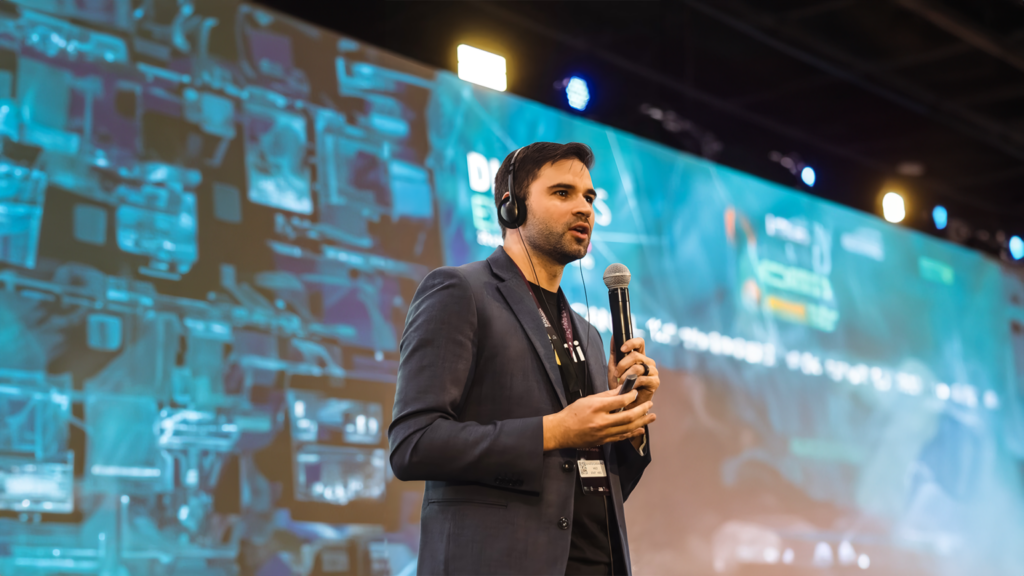
On the Trends stage, Renato Carvalho, Head for Latin America at Miro, gave the presentation “The DNA of Innovative Teams”, bringing practical reflections on how companies transform—or fail to transform—strategy into results in an increasingly distributed, collaborative, and AI-pressured context.
Why isn't declaring innovation a priority enough?
Innovation fails when it exists only in strategic discourse, without clear processes, adequate metrics, and an organizational culture that supports day-to-day experimentation and collaboration.
Report data “Most Innovative Companies”, from the Boston Consulting Group (BCG), indicate that the majority of executives state that innovation is among their companies' top priorities, but only a tiny fraction consider themselves truly prepared to innovate consistently.
This disconnect shows that prioritizing innovation in presentations and planning is easier than structuring teams, incentives, and ways of working that allow it to happen in practice.
What are organizational silos and why do they hinder innovation?
Innovation in silos occurs when areas, teams, or business units work in isolation, without continuous exchange of information, learnings, and shared goals.
When product, marketing, technology, and operations don't collaborate, promising ideas lose momentum, efforts are duplicated, and decisions fail to reflect the business's systemic vision.
What is the role of psychological safety in innovation?
Psychological safety is the condition in which team members feel safe to propose ideas, question decisions, admit mistakes, and experiment without fear of punishment or negative exposure.
Studies by Professor Amy Edmondson of Harvard Business School show that teams with high psychological safety learn faster, experiment more, and are able to innovate more consistently over time.
Customer centricity guides sustainable innovation by focusing on developing products and services that not only meet customer needs but also address environmental and social concerns. This approach ensures that innovation is market-driven and aligns with long-term value creation for both the business and society.
Customer centricity means putting the actual needs of the customer at the center of the company's strategic and operational decisions.
When different areas align their priorities based on the customer's pain points, expectations, and behaviors, innovation ceases to be random and begins to generate concrete value, whether through incremental improvements or new solutions that are more relevant to the market.
What can leaders do now to unlock innovation?
- Transform innovation into operational practice, with clear roles, processes, and metrics.
- Reduce organizational silos and encourage collaboration between departments.
- Create psychologically safe environments where mistakes and learning are part of the process.
- Use the customer as the main criterion for prioritizing initiatives.
- View collaborative tools as support, not a substitute for, organizational culture.
The main takeaway from Digitalks Expo 2024 is that innovation doesn't solely depend on technology or strategic intent. It happens when organizational culture, structure, and behavior are aligned to allow good ideas to transform into real impact.